Presentation at Jean Golding Institute - December 10, 2025
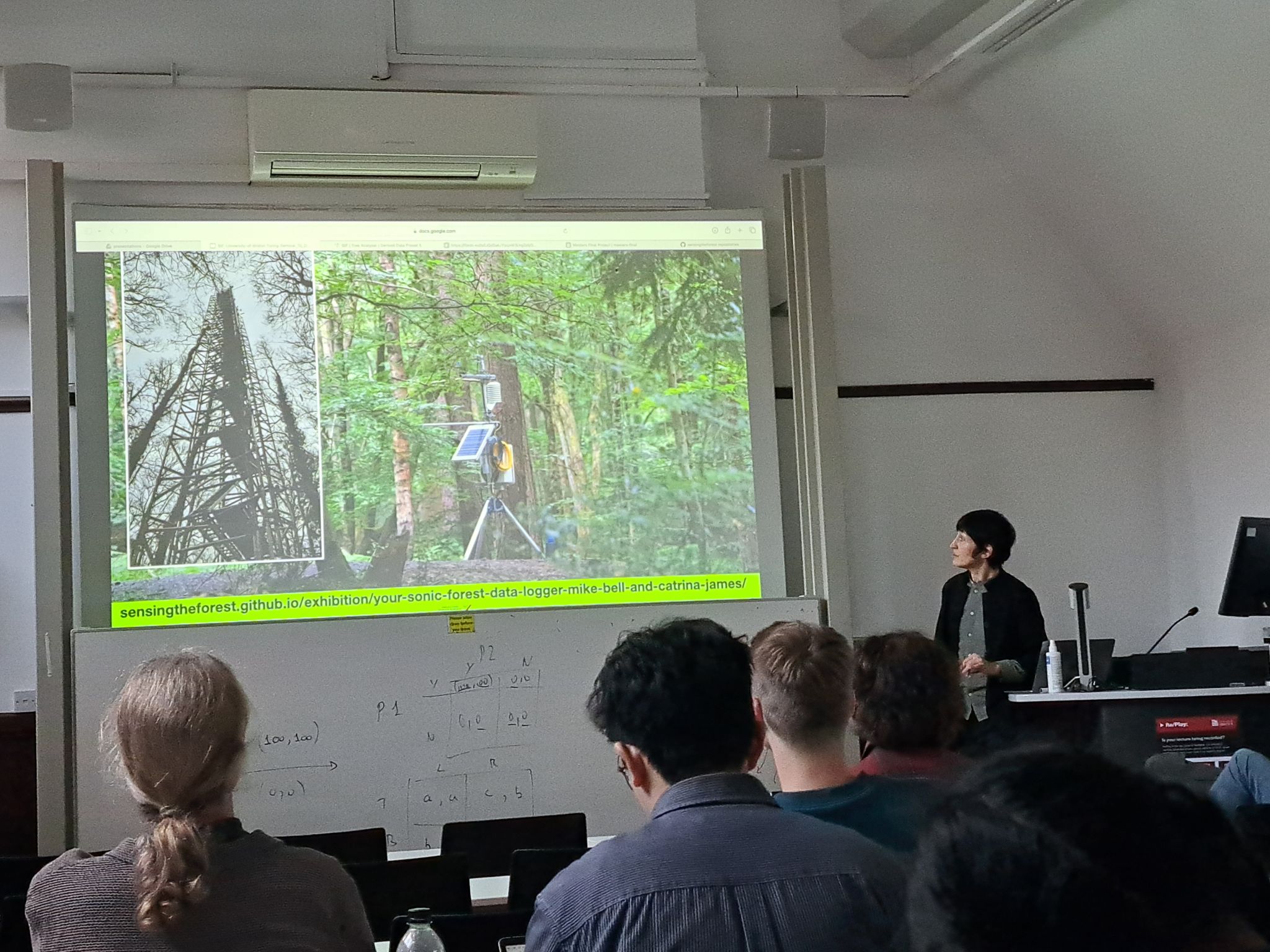
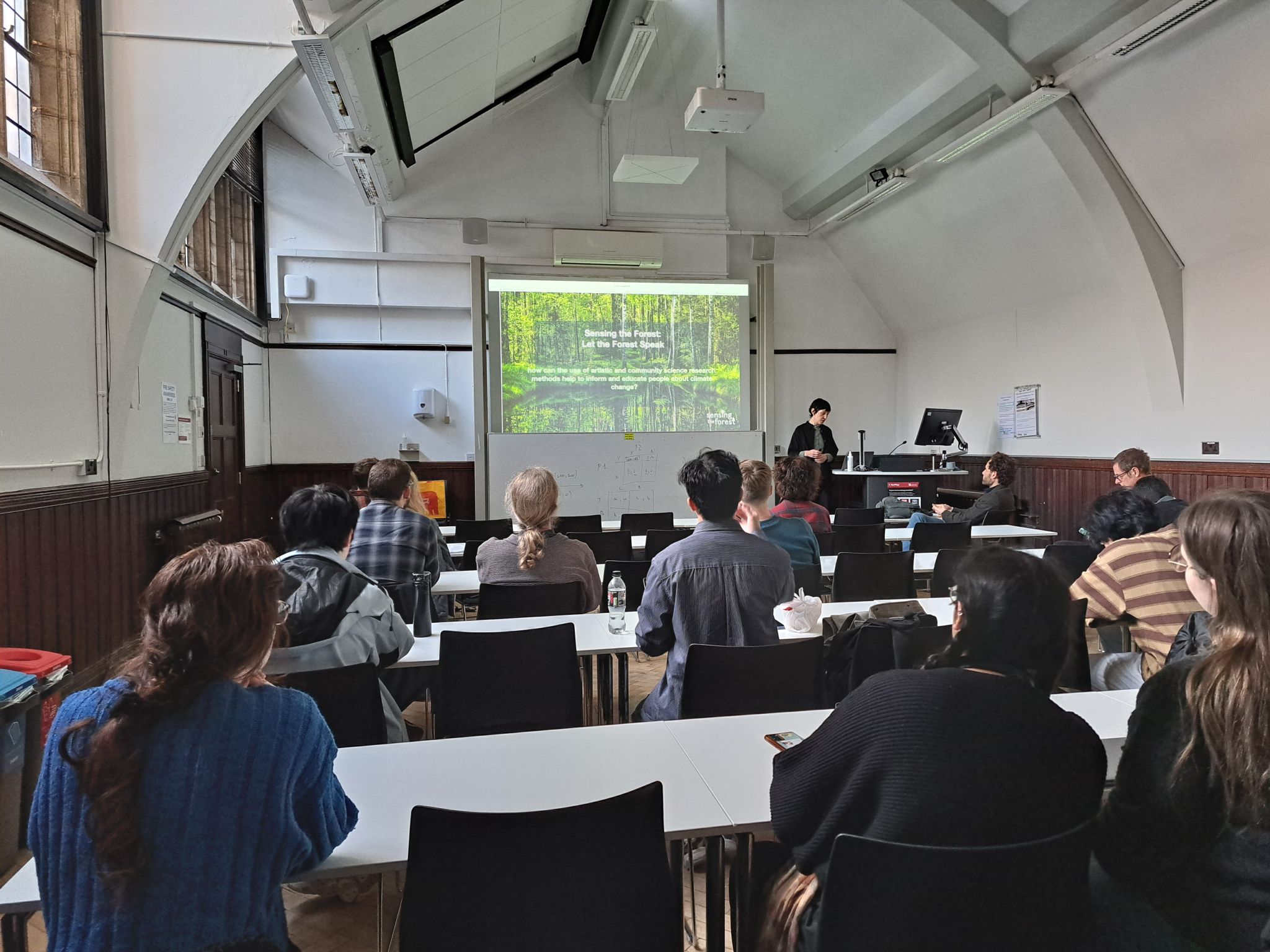
Today I presented the latest updates of the Sensing the Forest project at the Jean Golding Institute, University of Bristol, as part of their Turing Seminars.
About the talk
This talk presents the AHRC-funded research project “Sensing the Forest: Let the Forest Speak using the Internet of Things, Acoustic Ecology and Creative AI” through the lens of sound data as a primary material for exploring relationships between acoustic patterns, forest environmental conditions, and the longer-term indicators of climate change. Three complementary approaches to working with sound data will be introduced as we are now in the phase of analysis: acoustic ecology, sonification, and live coding. Together, these perspectives highlight how science, engineering, and art intersect through sound to foster new ways of understanding environmental systems.

Q&A
The event included a Q&A session and was followed by mince pies, tea, and coffee. I met many of the attendees in one-to-one conversations to discover that there was a diverse group of students and academics from different backgrounds, from digital anthropology to climate change communication, to geography, to cognitive science, to computer science, to HCI, to creative AI. The questions included: how does designing more than human inform this project?, do the generated soundscapes benefit the species and how could this be proved?, what were the reactions of the online listeners when connecting to the 24/7 streamer radio station?, what is live coding?, are we considering expanding the project to other forests?, and what is next?, among others.
These questions and conversations are very helpful in a stage of reflection about the project while we are completing the documentation and are focusing our efforts on data analysis and academic writing.
Acknowledgements
Thank you to Jim Evans, Pete Bennett, Conor Houghton and Emmanouil Tranos for the invitation and event organisation, to the attendees for excellent questions, and special thanks to Trisha Khallaghi for the inspiring follow-up conversation.